Author: Janie Braverman

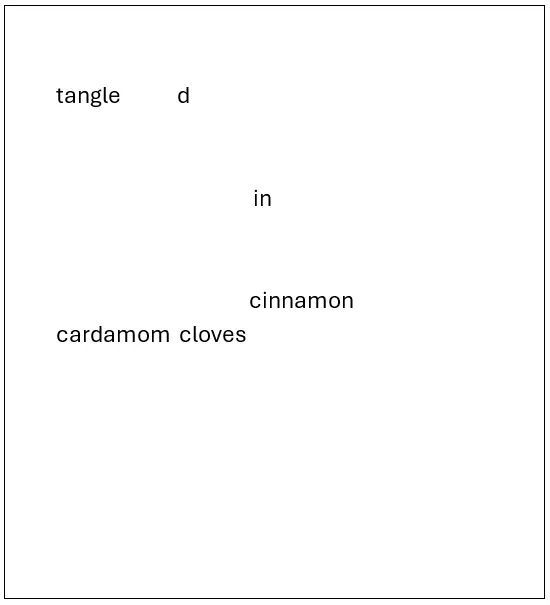
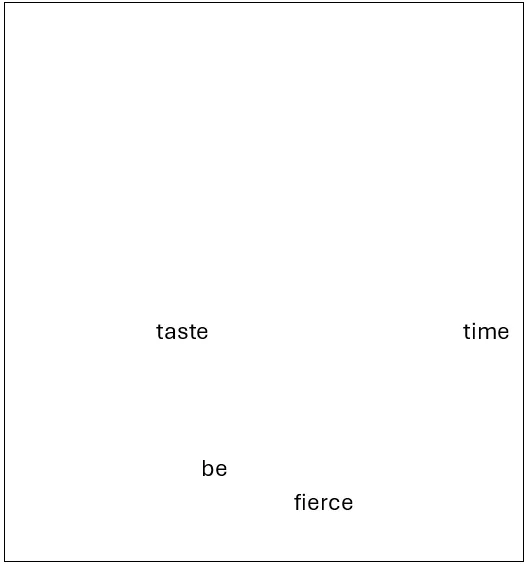
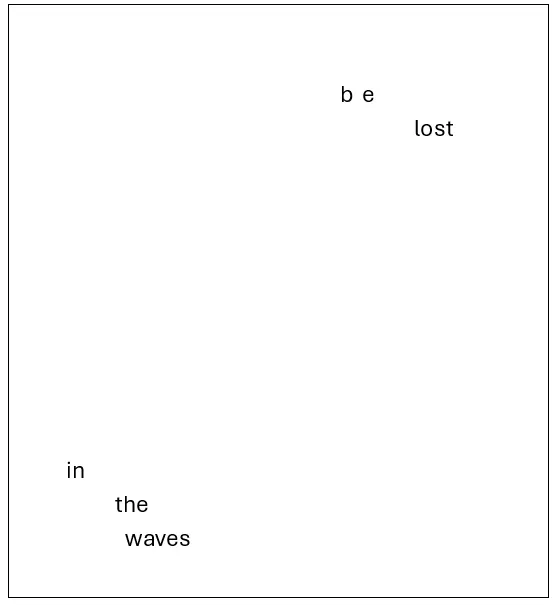
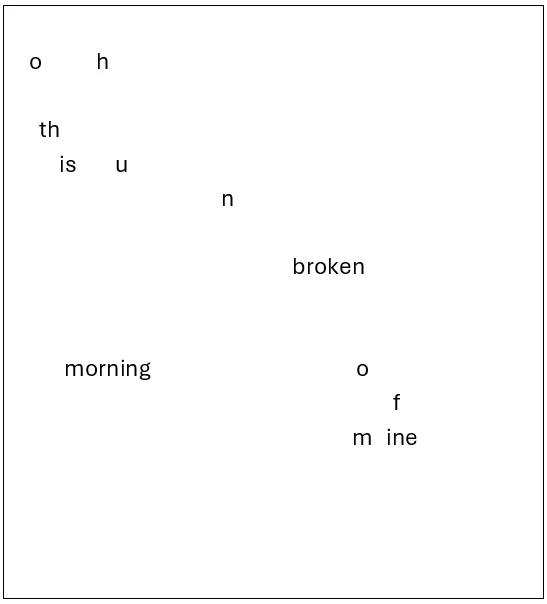
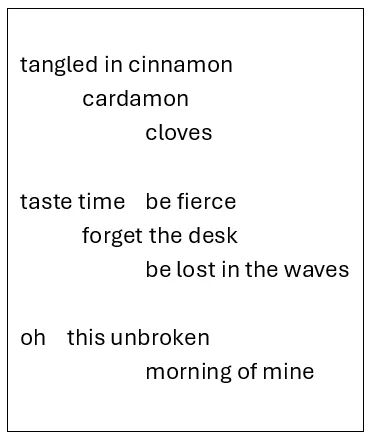
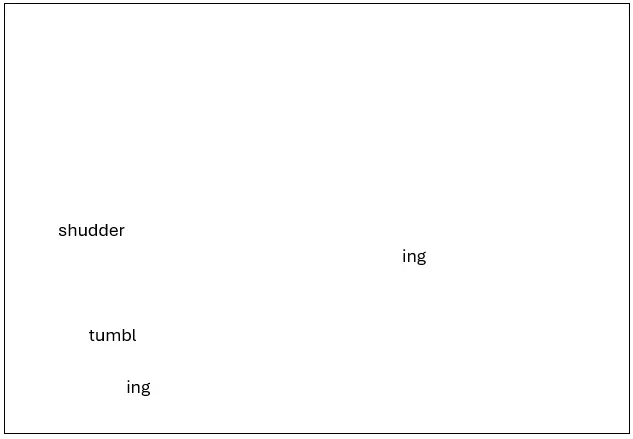
  • tangled

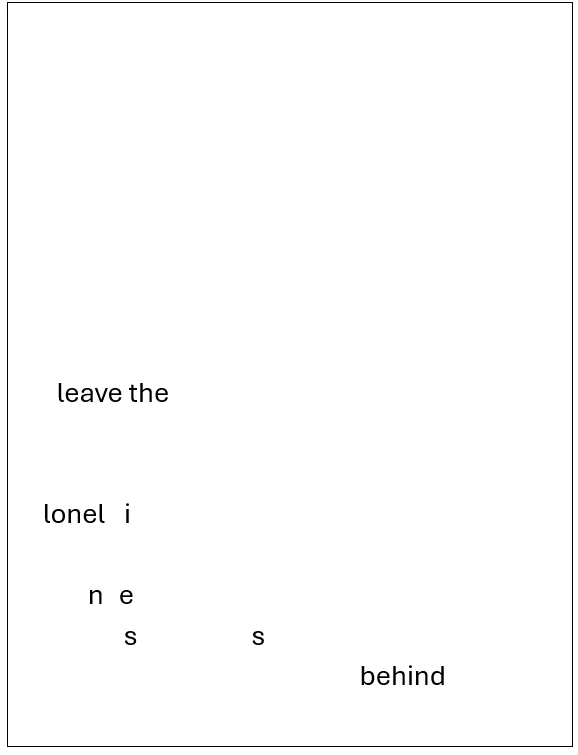
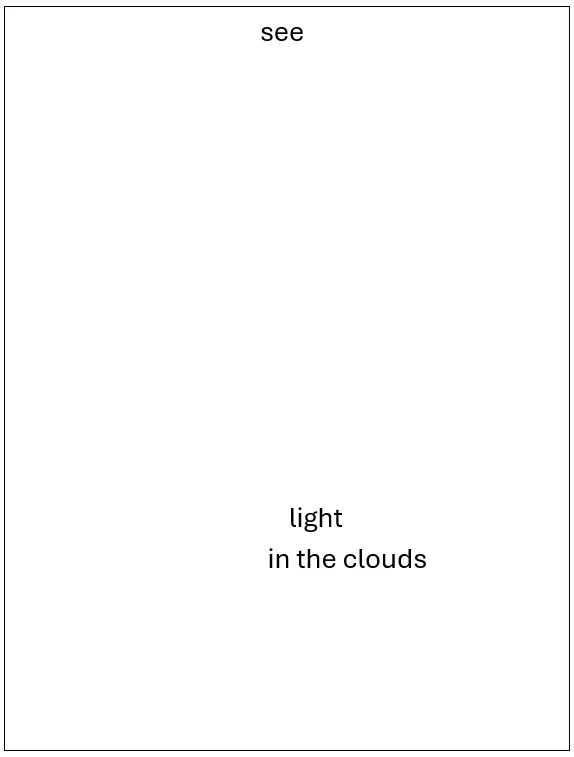
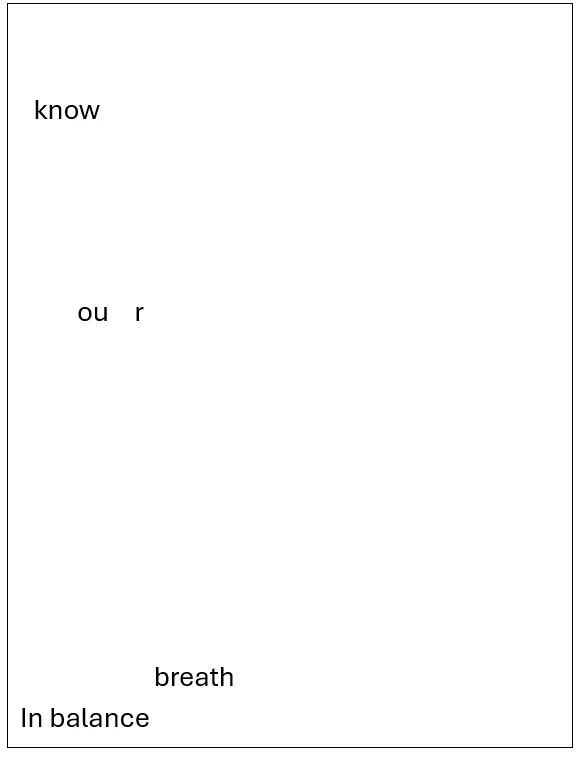
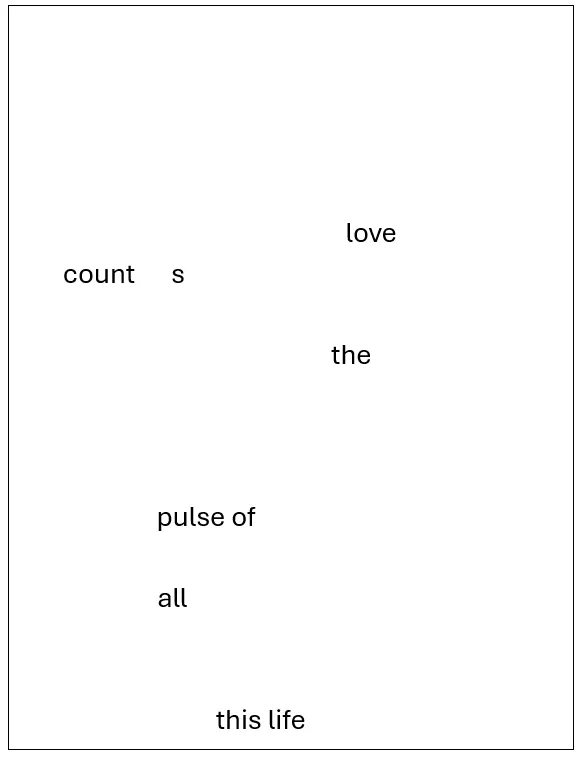
    tangled

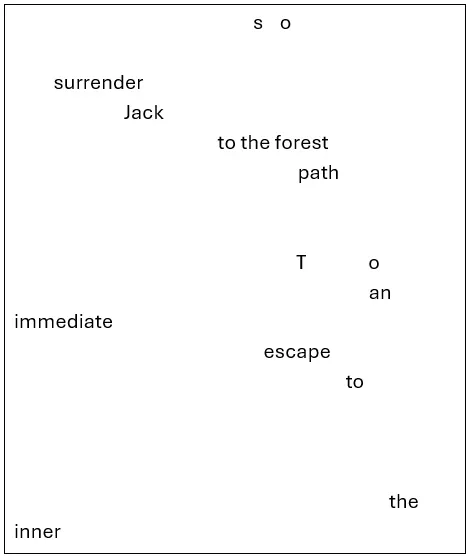
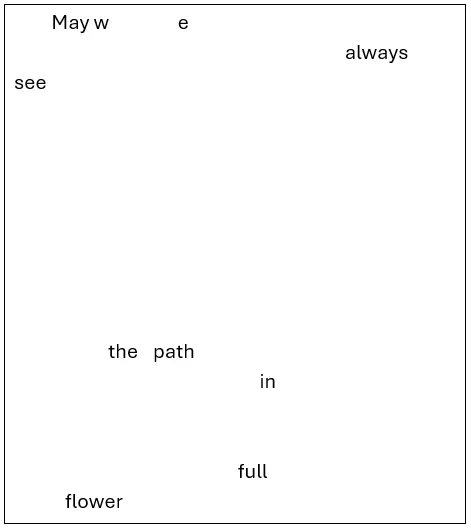
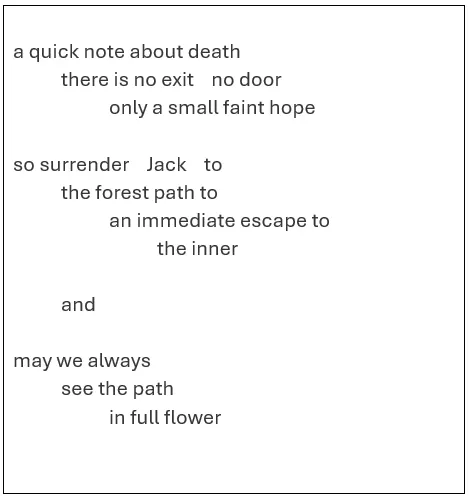
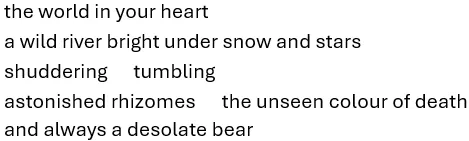
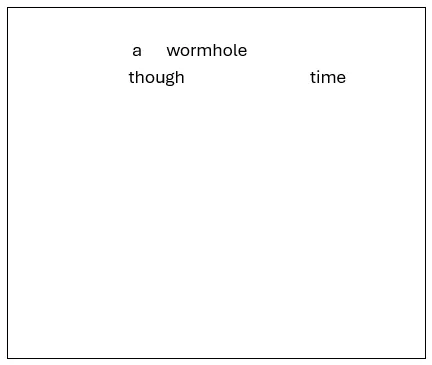
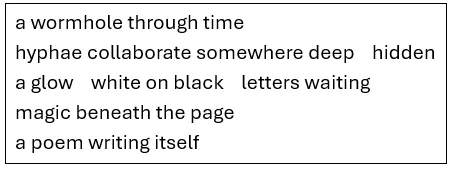
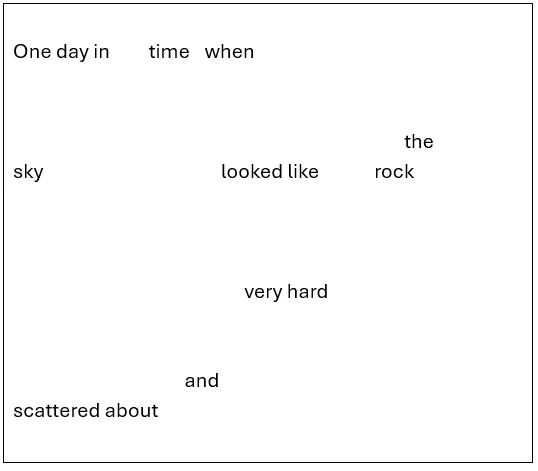
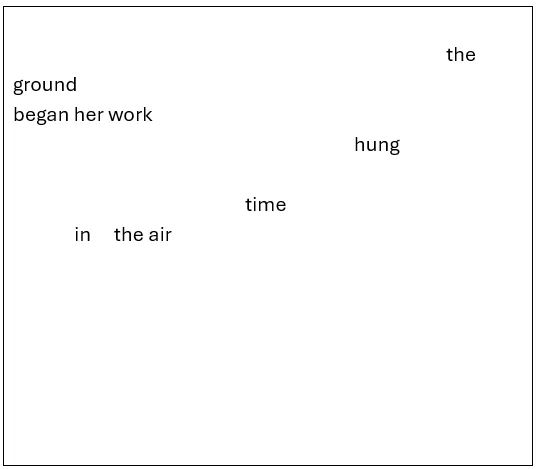
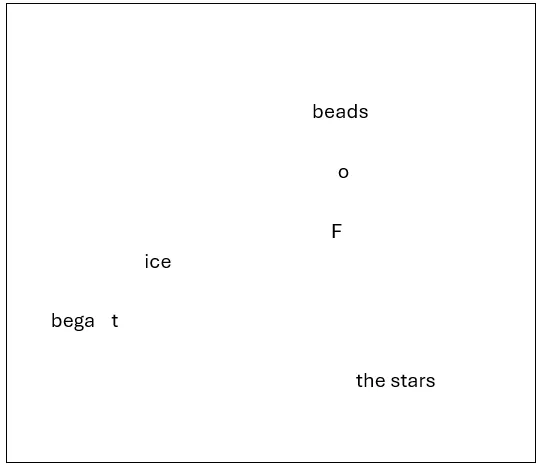
    a five-pass alchemy


    The poem:


    Source material, written by my friend Tara Kramer: “not-yet hour,” Earthwords (University of Iowa), Spring 2007

    Kramer’s memoir manuscript, The Deepest Light, won first place in Nonfiction, Tucson Festival of Books Literary Award, December 2025.


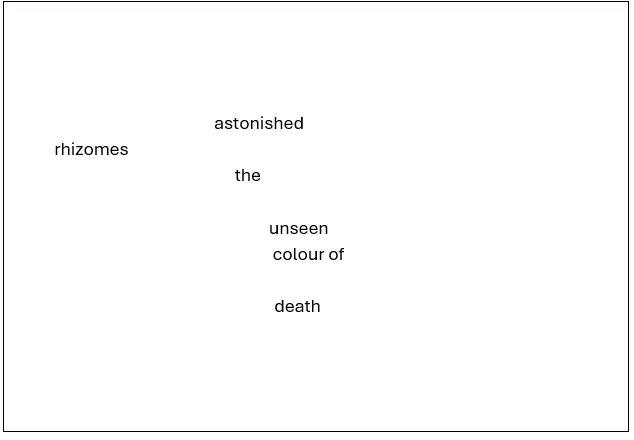
  • Juliet Changes

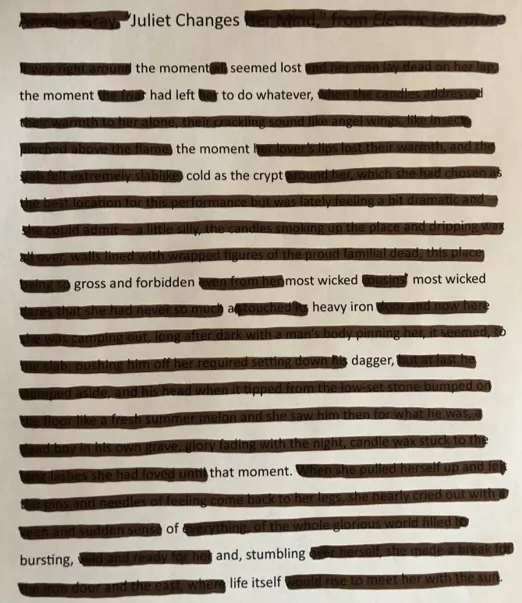
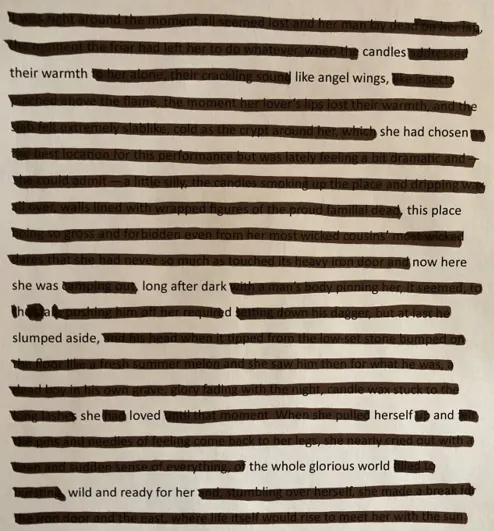
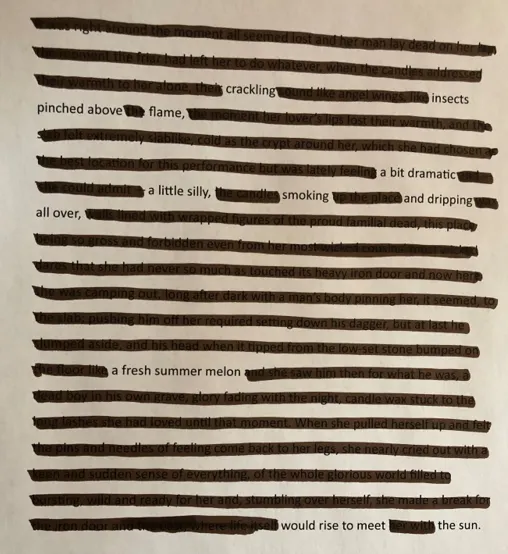
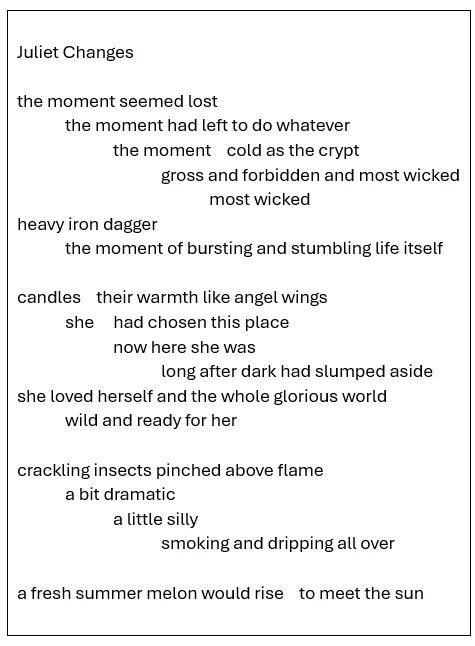
    Juliet Changes

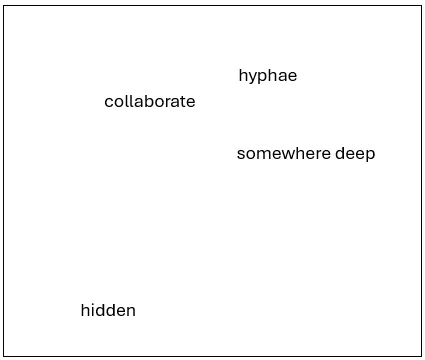
    an old school, three-pass erasure poem


    The poem:


    Source:

    Amelia Gray, “Juliet Changes Her Mind,” from Electric Lit


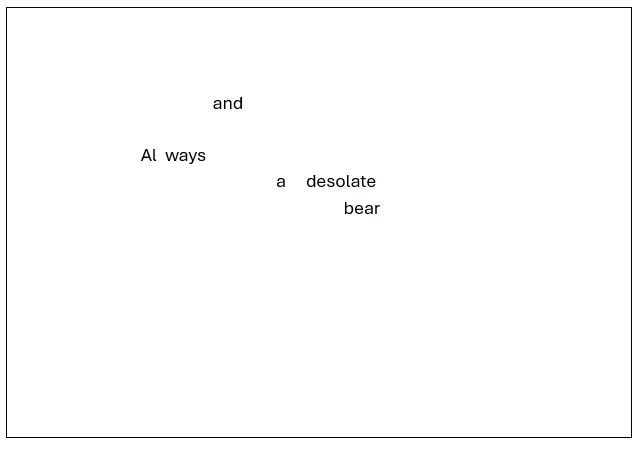
  • lux in nubis

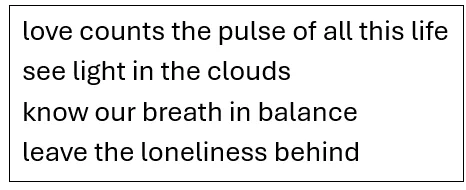
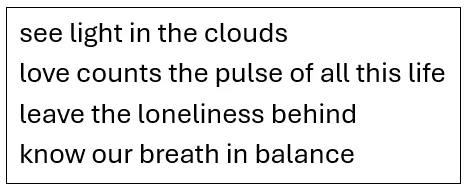
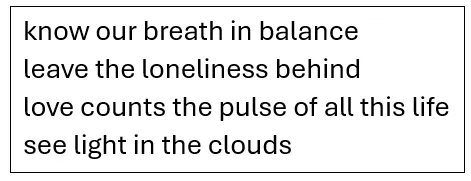
    lux in nubis

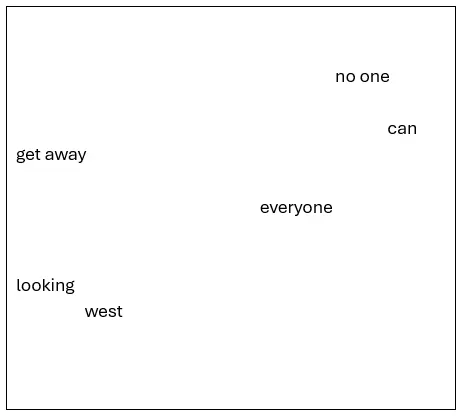
    a four-pass alchemy with sixteen possibilities

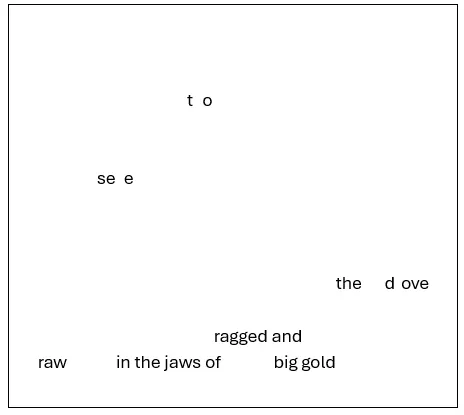
    Josh Datko, from his excellent series of antiwar poems, where he says: “I am desecrating war poems with erasures. None deserve it more than W.B. Yeats.”


    You may read the lines of this four-pass alchemy in any order—there are sixteen possibilities. One is above. Here are three more:


    Source: William Butler Yeats, “An Irish Airman foresees his Death,” which you can read here, where it lies and lies under Josh Datko’s desecration.


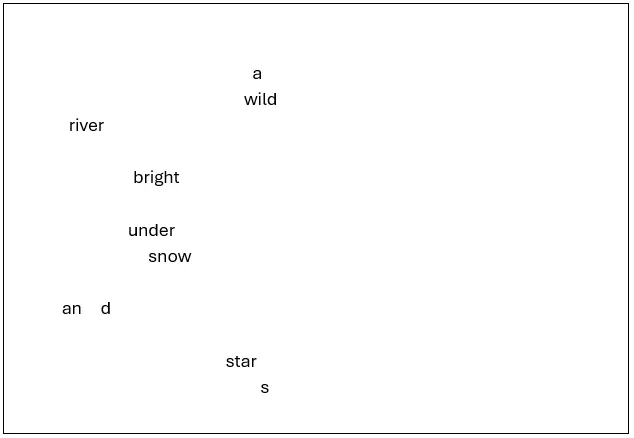
  • snow

    snow

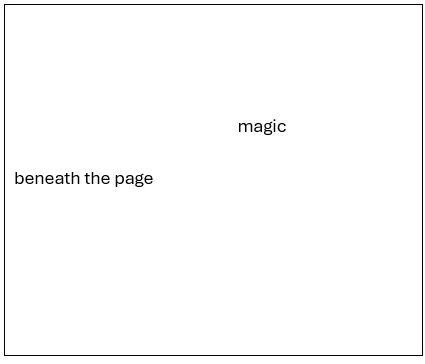
    a five pass alchemy


    The poem:


    The source: Margaret Avison, “Snow


  • call the quiet

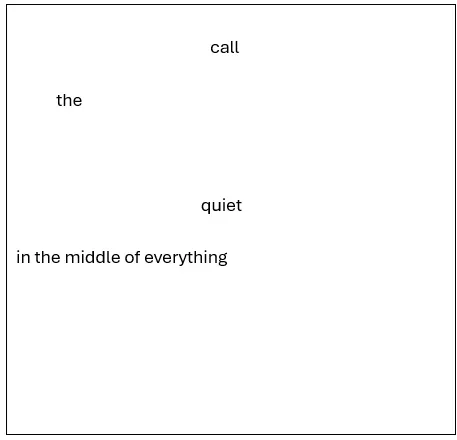
    call the quiet


    Source for this four pass alchemy: “[From this bench I like to call my bench]” from frank: sonnets, by Diane Seuss.


  • in the Sea

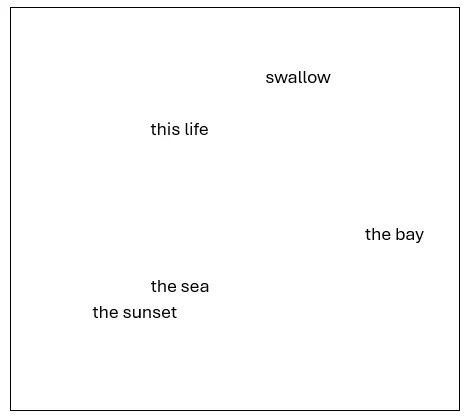
    in the Sea

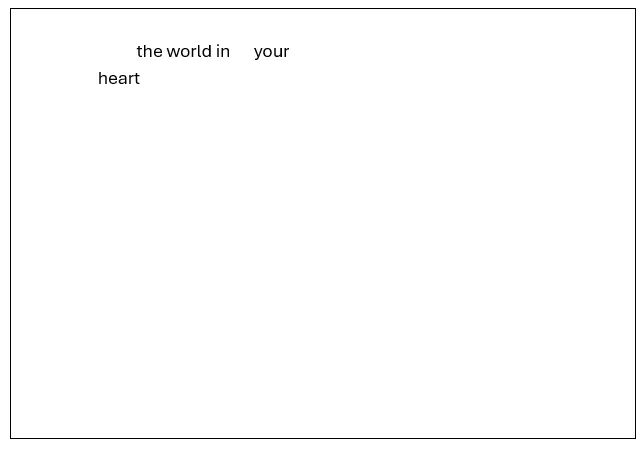
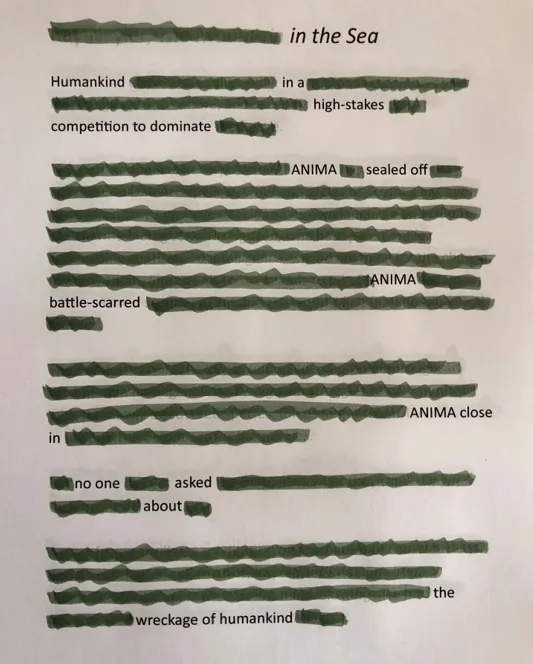
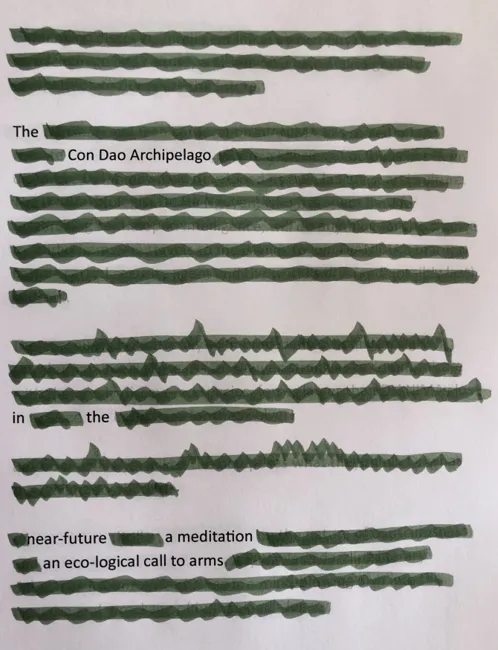
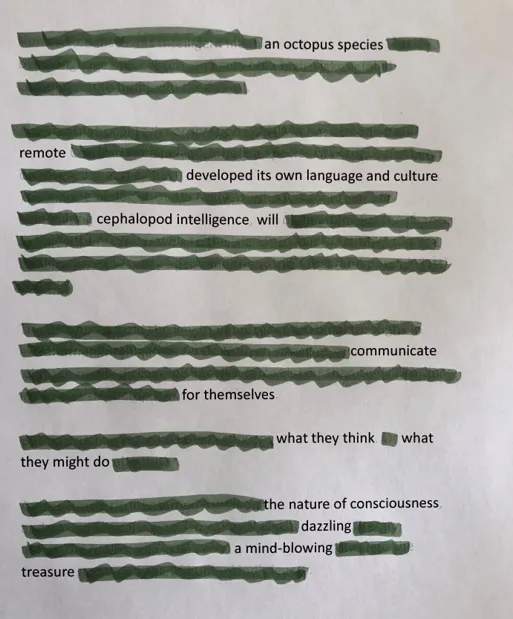
    old school with water-based marker


    Sourced three times from book details (MacMillan Publishers) for The Mountain in the Sea, by Ray Nayler.


  • Leah Stavenhagen

    Leah Stavenhagen

    1993-2026 (an off-cycle post)

    Leah Stavenhagen—dancer, traveler, author, advocate—died February 19, 2026.

    She was 33.


    Amyotrophic lateral sclerosis, also known as ALS or Lou Gehrig’s Disease, is a rare, terminal neurodegenerative disease.

    Progressive motor neuron loss causes gradual muscle stiffness, twitches, weakness, and wasting, continuing until the ability to eat, speak, move, breathe without mechanical support is lost.

    While ALS occurs more commonly in men and older people—and is stereotyped as an older white man’s disease—it does not discriminate on the basis of age, gender or race. There is no definitive diagnostic test, most often no known cause, and no known cure.

    The treatment goal for ALS is to slow disease progression and improve symptoms.


    In 2019, nearly a year after the appearance of her symptoms, Stavenhagen was diagnosed with ALS.

    In 2021, she started Her ALS Story (HAS)to raise awareness of ALS among young women and to build a community.

    In November 2025, an article about young women with ALS appeared in The New York Times.

    In February 2026, it was Stavenhagen’s obituary that appeared.

    The ALS Association posted here in response to her death. Her friends and colleagues at HAS call her a blessing and an inspiration—and a straight-up badass.


    Stavenhagen wrote a memoir, I Want to Dance Again, in French.

    If you don’t read French, but you’re ready to learn more about disability and the disability community, take a walk through an accessible art museum by reading Rob Macaisa Colgate’s book of poems, Hardly Creatures.
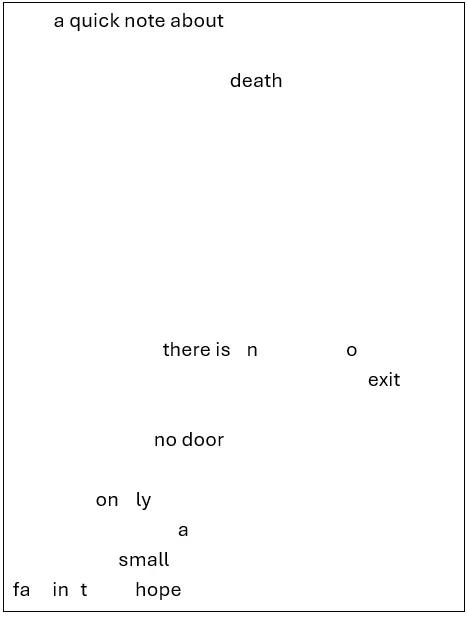
    Whether you read French or not, read Fierce and Delicate, Essays on Dance and Illness, by Renée K. Nicholson.
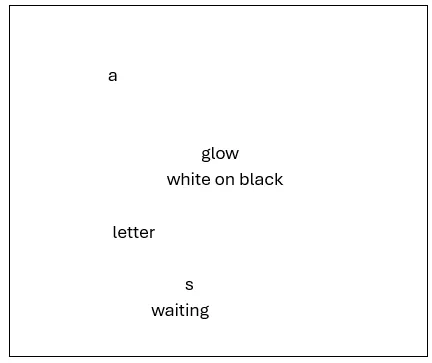
    To learn more about ALS, go to the ALS Association.

  • Erasure is always stalking us, you know?

    Erasure is always stalking us, you know?

    ~~Anthony Doerr, Cloud Cuckoo Land


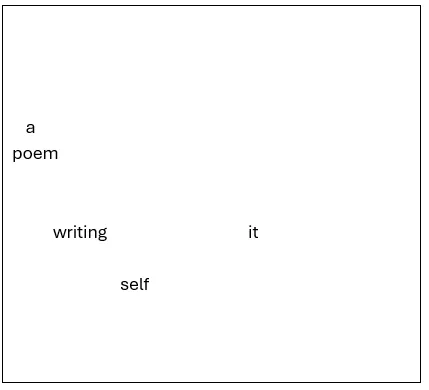
    The poem that wrote itself:


    Source: Anthony DoerrCloud Cuckoo Land


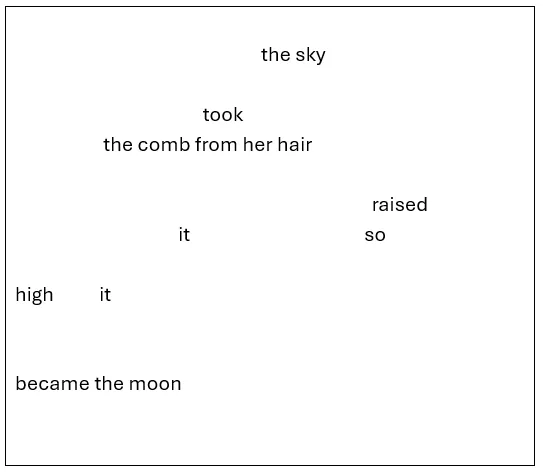
  • the comb from her hair

    the comb from her hair

    an origin story


    Source material: “How the Moon and the Stars Came to Be”, as told by the Bukidnon people, in Mabel Cook Cole’s Philippine Folk Tales (1916).