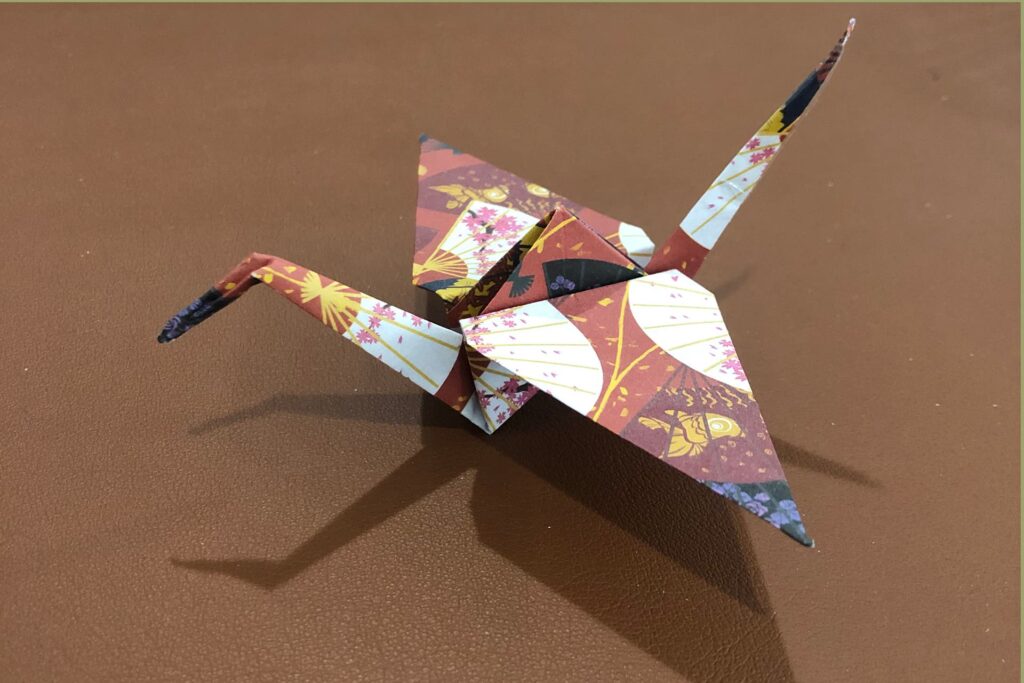
There is an intimacy in walking together nearly lost in this modern age. The slow swing of one step after another the thud of boot on rock the rush of the water companion the swish of canvas packs and pants up the path.
We walk up and talk of the city until the quiet crunch of pine needles the hush of rubbing branches the distant call of camp robber, grey jay begins to calm, to soothe, to remind.
We walk down under thunder patted by rain talk now about choices life directions unintended and unexpected. We stop to watch the elk separated from our sight by the line of lodgepole pine.
We walk. We think. We walk again.
Your long legs at ease on the path, we pass the horses then the droppings of horses and prints of horses. We do not pass the memory of horses.
And so it is that I am at the Wall. Ha Kotel. The old cold stone beneath my hand, alive with the prayers of a million living Jews and six million and more no longer living. Alive with the breath of God. And so it is that I am called, called, called home and home again to where the stone grows warm against my forehead though it is December and we wear wool against the cold. Called back through my soul through the souls of the ones before all of us in Egypt all of us at Sinai all of us in the heart of God. I lean on the Wall and God holds me. I lean on the Wall and God breathes with me. The day falls away and I stand in the wind on Masada. Desert fortress besieged by Rome for over a year then breached by ramp to the death of all but a single witness and child. Never again. Not just never forget, but never again .
We will walk it back from the bright roar of water from the turmoil the cataract the whirlpool the rapids we will quite suddenly understand form and boundary go where the rocks slant a lapsed and collapsed bank of the river hauntingly brutal and beautiful
We will walk it back from the time of poked-out eyes and bloody crushed crusaded bodies bits and bones tossed over the bridge
We will walk it back from where the flame sinks over the conquerors and the conquered alike where G-d is absent and no one can survive a week much less a lifetime
We will walk it back to avoid the reckless the pointless with our nervous and nerveless mouths without saying a word we will ask our partners for forgiveness we will remember they have other things to do we will listen carefully if they speak leave them alone when they sleep let the silence spill
As the day goes dim and the old wander home we will lie on our backs in twilight listen to the melody of the Solomon Islands and Ukraine walk it back under thick columns and piers green with slime black and discolored with mold and oil and the breaking of hearts
alive & alight with the elation & gladness of living remind her milk thistle is not milk brain imaging scans of living dinosaurs are still a myth September rain falls on the crying & the flying alike fishes school & glitter like snowfall steam rises there is an up staircase in the flame
Remind her while she is young – but not too young please – to handle herself with care to eat ice cream on Sunday to not step on a wind-up beetle to not hold the weathervane in a high wind lest she go Dorothy-to-Oz or call down the lightning
Remind her that each seismic shift has its own quirks that may take weeks to decipher to not be resentful if bitten by fleas bedbugs mosquitos but to pay more attention to the passageways too small for a person remind her how to know that small rabbits are not stupid but are rightly afraid that we all breathe & sigh breathe & sigh & that we all fear what comes down from the mountain
Remind her to know the difference between the youngest & the quietest as they are not the same remind her to not take a direct path home from the cemetery lest the demons follow her there to whistle in the dark but not past that graveyard & not indoors lest the Chinese legend of bad luck & exploding stoves be true
Remind her to open the black door in the morning stir the ashes of pine curled into bracelets manacles fetters shackles drop them to dust
Remind her then lie on the kitchen floor while the night comes listen to her sing
Consider the complex histories of granite & marble bronze & steel swirling & circling just out of sight unfazed graceful awaiting rediscovery
Consider an attack angle of 20 degrees spin rate sufficient for gyroscopic stabilization wonder if corruption comes from the theories of hydrodynamics stone essentially solid & substantial somehow becoming softer
Consider an effort to find personal accord with the indigenous stones whether newly fallen from stars or risen from the ashes
Consider selenology & that the distance to the moon grows by 1.49 inches each year that stone isn’t naturally malleable & yet
Consider each person you love placed lengthwise on their most stable side just touching the next generation in lines of seven the configuration not symmetrical
Consider the lake in the woods trees bowing down over the water your own head down as if in prayer wonder might the stones steal autonomy ride through the town with pitchforks & torches
Consider how history repeats itself danger & deathblow each stone the size of your palm & as flat as infinite lines not curving not touching Is anyone safe?
Consider the biomechanical methods to make power how you like to understand the forces distance finesse strength & archaic lifeforms transformed under geological pressure
Consider sailors throwing buckets of water overboard to prevent their ship from sinking consider the geometry of the water the geometry of the boat the geometry of time
Take your tap shoes outside practice on a piece of plywood inside you set off the rabbit who thinks you’re announcing the apocalypse
An event involving destruction or damage on an awesome or catastrophic scale
Autoimmune encephalitis, paraneoplastic to a germ cell tumor . . .
Used in a sentence:
In February 2017, I was writing a post-apocalyptic novel when the apocalypse itself came for my youngest child.
HOW TO FOLD 1000 PAPER CRANES
An ancient Japanese legend promises that one who folds a thousand paper cranes will be granted a wish.
Sit by your son’s bed in the Surgical and Neurosciences ICU (SNICU), listen to the ventilator breathe for him. Hold his hand. Sob in the hallway. Go home to sleep, shower, and eat. Fold a dozen paper cranes.
Look at his MRI. See a lesion the size of a plum sitting on top of his hypothalamus.
Return to the SNICU. Watch him respond to stimuli. No one is saying coma.
Watch him stretch like a cat. Overhear a SNICU nurse call it posturing, say she’s never seen anyone both posture and respond.
Go home to sleep, shower, eat. Fold another dozen cranes. Watch your daughters fold cranes. Ask Dr. Google about posturing and realize that what you’re seeing, which looks so like him stretching like a big kitty, is really something very bad.
Try to keep breathing.
Listen to the neurosurgeons say it’s either lymphoma or glioblastoma. One cancer would be treated with chemo first, then radiation. The other radiation first, then chemo. There will be no surgical solution.
Steroids run through an IV. Cerebral spinal fluid drips from the drains threaded through his scalp, into his ventricles. Listen to them say he’s not stable enough for a biopsy. Listen to them say there will be treatment options. Know that if it is glioblastoma, the treatment will be chemo and hospice. Or maybe just hospice.
Return to the SNICU. Go home. Return. Go home. Fold more cranes. You have arthritis in both hands. You cannot feel it over the fear.
Six days in, still in a coma. Promise him it will not always be like this. Sign the consent for the biopsy. Keep breathing. Speak to G-d on the subject of what the fuck is happening to your son. He’s in the OR, in the hands of the surgeons. Pray he’s also in the hands of G-d.
See him come back from the OR, more stitches in his scalp, more blood. Still not breathing on his own. But alive.
Seven days in and the pathology report arrives. Oncology is the first to say there is nothing for them to do. The mass in his brain is not a tumor. Neurology says there is nothing for them either. It’s a clump of demyelinated cells, some kind of inflammatory process, something they can’t identify.
Eight days in. Listen to the SNICU doctor explain they need to wean him from the ventilator. Listen to her ask whether you want him re-intubated if he cannot breathe on his own. Realize what she is asking. Know that you will not be allowed in the room, will not be allowed to hold his hand.
Know that life on a ventilator, in a coma, would be unacceptable to him.
Hear your oldest daughter say there is no diagnosis. This time it is easy. Tell the SNICU doctor to re-intubate if he cannot breathe on his own.
She extubates.
He breathes on his own.
He breathes on his own.
He breathes. On his own.
~ ~ ~
So many tests. All negative or inconclusive. Some of the diseases they’re testing for are worse than others. All of them are bad.
Stop asking Dr. Google when you realize neither the doctors nor the internet know what is wrong with him and that you cannot sort
fact from
fiction from
this doesn’t apply from
this can’t apply from
oh, please, no, not this.
Be grateful when he is moved from the SNICU, to the step-down unit. Be grateful that he can stand, that he can walk with help, that he recognizes you. That he can swallow.
Ask your colleague about medical and financial powers of attorney. Wait outside the room while your son nods his consent. Be very grateful he is competent—somehow, barely—to make those decisions. Don’t think about how he’s not speaking. Grieve that he is unable to sign his name. Be knocked to your knees the first time you use the financial power of attorney, to sign his tax return.
Go home. Fold more cranes.
~ ~ ~
Your ex-husband, who lives 800 miles away, will stay in your home, the home you have made with your second husband. You are estranged from your ex, but your son is not; your daughters, who are also 800 miles away, are not. Your ex will stay with you, time after time. That will get hard later, but for now it just is.
~ ~ ~
Walk with your husband—your son’s stepfather—across the skybridge from the hospital to the campus transportation center. Ride down the escalator. Walk through the parking lot, cross the street, climb the steps to the arena for a basketball game. It is an oasis you won’t remember.
Outside, after the game, your husband turns right, to where his car is parked. You turn left. Your car is parked in the ramp at the hospital.
Be unable to find your way back to the skybridge, although you can see it from the arena. Your mental maps have gone offline. Be suddenly furious when you can’t remember where the traffic light is, where the crosswalk leads to the parking lot, to the escalator, to the hospital. Your hands and your feet ache in the cold. Spike your cellphone on the icy sidewalk, as if it were a football. The force of it hitting the cement scrambles something inside.
Your husband doesn’t understand how you could have been so lost but will take your phone to be repaired. You don’t understand either. The disorientation will extend to the streets of the town you have lived in for over twelve years, and the loss of your mental maps will become just one more fucking thing.
~ ~ ~
Listen to the doctors say that the high-dose steroids that have made him so sick have shrunk the mass from the size of a plum to the size of a squashed grape. Listen to the doctors suggest that what happened may be idiopathic, may never recur. Be unable to hear anything else after that. Ignore the possibility of recurrence.
Listen to the social workers explain that your son is going to be discharged and you need to pick a place to transfer him for rehabilitation. Ignore your husband wondering if, instead, you should take him to the Mayo Clinic for diagnosis. You will come to regret that you didn’t take your son to the Mayo Clinic as your husband had wondered.
Choose the brain rehab facility called On with Life, in Ankeny, a suburb of Des Moines, 111 miles from home. Learn to call it the OWL. Do not visit. You’ve been there before, visiting your friend. Her recovery has been neither easy nor complete.
Arrange for your middle daughter to ride in the ambulance with him. Reserve hotel rooms. Pack clothes and your own meds. Drive west on I-80, the hundred or so miles to Ankeny.
Find your daughter and your son in a small room. He is in a tilt-in-space wheelchair, chilled and unresponsive. She is terrified. The staff offers warm blankets. You will not know until later that warm blankets are inadequate, and the ER is inevitable—that another coma is coming.
Meet therapists—physical, occupational, speech, music. Sit with him while he sleeps. Go to therapies with him. Hug him for the first time since before the ER. Try not to cry. Fail. Fold more cranes.
Three days later, a cold Friday in March. Your son’s heart rate, temperature, and blood pressure are dropping, and Physical Therapy is worried. He seems to have enough energy for therapy or for eating, but not for both. Agree to ambulance transport to the ER in Des Moines, rather than waiting for him to crash over the weekend. Have no idea yet what “crash” means.
In the ER see a Bair Hugger—a hospital-grade, inflatable warming blanket—for the first time. Misunderstand the ER doctor, think your son is being admitted to be warmed, think he is stable. Go to the hotel to sleep.
Get called back by the ER doc. Be told she wants to transport him back to Iowa City on a helicopter, to where his neurologists are. Argue with her about him being intubated, knowing he responds as if he had a traumatic brain injury, that it will take him days to wake up. Be told the ER doc will intubate him if she admits him. Be told the helicopter won’t take him unless he’s intubated. Realize you have no options. Consent. Over a year later, when you are reading the hospital records, realize the ER doc didn’t want him to die in her ER. Or in her hospital. Realize that she, too, had no fucking clue what was going on with him.
Be told you cannot ride in the helicopter with him. Call his friend in Iowa City to meet him at the ER there, to not let him be alone. It’s nearly midnight. It’s a big ask, but she doesn’t hesitate. Do not tell her you are terrified that he will die alone if she does not come.
Listen to the flight nurses evaluate him in the ER, insist on more sedation. Try not to think about him having been aware when the ER doc intubated him. Be told by one of the flight nurses that the pilot will decide if you can ride with your son.
Listen to the pilot tell stories about moms who were too freaked out to be allowed in the helicopter. Listen to him say he knows you are not one of them. Do not tell the pilot that you are afraid to fly. It’s only a 40-minute flight. You can do anything for 40 minutes. Swallow your terror. Get on the helicopter.
Watch the ground fall away. Hear your lizard brain scream, over and over, we’re all going to die! Swivel the intercom mic away from your mouth while you cry. Watch the clock on the dashboard. Do not watch the cars on I-80.
Listen to the flight nurses over the intercom. They’re down to t-shirts, sweating heavily, but ask for more heat. He is cold, so cold. You and the pilot are freezing up front, all the heat routed to the back, but you are not the one the cold might kill. Listen to the flight nurses say something about a brain tumor. Swivel the mic back to tell them it’s a demyelinating lesion, it’s not a brain tumor, he doesn’t have cancer. Have no idea how wrong you are.
Know that your daughter is driving the two hours back to Iowa City, to meet you at the ER. Know that your husband is too tired to drive tonight, but that he will be on the road before dawn. Know that he will pack everything—your stuff and your daughter’s—and check out of both hotel rooms.
Listen to the pilot talk to the flight nurses, tell them it’s not going to be 40 minutes, but well over an hour, because of the headwinds. Listen to the flight nurses tell the pilot that’s not good enough. Count your breaths. Try not to scream. Realize that the whimpering you hear is you. Be grateful for how loud the helicopter is. Believe that no one can hear you.
There are no sirens on an air ambulance. If you were on the ground, you would be headed to the hospital Response Code 3, lights and sirens. Be unable or unwilling to make the leap to being grateful that your son is unconscious.
Listen to the pilot say he’s going up 1000 feet to see if he can catch a tailwind. Think about that. Think he’s got to be kidding, that wind doesn’t blow in completely different directions at different altitudes, until he climbs, catches a tailwind, and suddenly you’re hurtling forward again.
Days later, you will get in a glass-walled elevator at the hospital. You will have a flashback to the ground falling away under the helicopter. You will hear the screaming fear that everyone is going to die! You will ride in that same elevator again and again. You will not face a glass wall in any elevator for a very long time.
Look out the window as the helicopter approaches Iowa City. Know that you’re flying just south of your house. Do not try to pick it out. Fly over Kinnick Stadium, lit up and somehow tiny. A year and a half ago, you ran the 5K that finishes on the football field. Eighteen months from now, it will feel like a miracle when you run it again.
Spot the hospital landing pad as the lights come on. See how it is surrounded by sharp spires. Realize how windy it is, how buffeted the helicopter is as the pilot maneuvers down to a bumpy landing. Do not unbuckle the five-point harness until he tells you to. Realize you are clutching a barf bag you don’t remember him giving you. Your legs are stiff from the cold and the fear. You nearly fall climbing out.
Run beside the gurney across the rooftop. Be grateful that your son is so wrapped in blankets that you cannot see his unconscious face. Tell everyone you see that he’s cold and needs a Bair Hugger.
Note the lack of urgency in the ER. Insist on a Bair Hugger. Step out into the hall to catch your breath and see his friend coming. She holds you while you shake.
Ask the nurse to page neuro. Ask the ER doc to page neuro. Insist that they page neuro. Wonder if you’re going to have to fucking page neuro yourself. Isn’t this why you are back in Iowa City, to see neurologists who know him?
Explain again and again that he doesn’t have brain cancer, that he hasn’t had brain surgery other than the ventriculostomies and the biopsy. Hold his hand. Feel him begin to warm up under the Bair Hugger that finally arrives. Watch him buck the ventilator. You and his friend hold his arms so he won’t pull it out. Though he’s no longer sedated, it’s been long enough he might not breathe on his own.
Realize, when the neuro resident finally arrives, that it’s after 3 a.m. It’s a resident you do not know. He doesn’t know your son.
Shake with fatigue. Start seeing spots in your peripheral vision. Wonder if the ER floor is clean enough to sleep on. Hear your daughter arrive. See how shell-shocked she is, but be unable to comfort her. Have no answer when she asks if he’s OK. Listen to his friend sing to him, low and sweet. Realize, much later, that she is singing to all three of you.
Take the keys and directions to the car from your daughter. Leave her at the ER. Ask your son’s friend to watch over her, too. Know it may be a long time before your daughter forgives you for leaving her at the hospital in Des Moines to get on the helicopter without her. Know it may be even longer before she forgives you for leaving her with her brother, on a ventilator, in the ER. Without you.
Go home to sleep.
~ ~ ~
Return mid-morning to find him being transferred to the Medical Intensive Care Unit, MICU. SNICU and MICU—they sound like interchangeable electronic components. They aren’t. Learn that the neurologists who come to see him, the neuros who know him, don’t get to make decisions in the MICU, don’t get to direct his medical care. Wonder what the fuck you are doing back in Iowa City.
Tell the docs he is a full code. Wonder when you learned the words for the opposite of a Do Not Resuscitate order.
Listen to the ventilator breathe for your son, as you wait for him to come out of this second coma. Watch the numbers on the ventilator improve as they begin to wean him. Stand in the hall while they extubate. Hold his hand after. Listen to him breathe on his own. Watch him, over time, come slowly back to consciousness.
Do not consent to another NG tube, a feeding tube threaded through his nose. Ask for a PEG tube, to be surgically inserted directly into his stomach. In the SNICU he managed to rip out the NG tube a dozen times, even in wrist restraints. Yes, he bled. No, restraints are not acceptable.
Ask the gastrointestinal surgeon to take good care of your son, but to be quick, if she can. Know that this anesthesia may mean another coma. Know the PEG tube is the right decision. Hope the PEG tube is the right decision. Pray the PEG tube is the right decision.
~ ~ ~
Greet the nurses you remember when he’s transferred to the step-down unit. They are dismayed to see him back.
Days pass. Watch him respond to the doctors, to commands to squeeze hands, wiggle toes, open eyes. Watch him refuse to respond to the doctors, refuse to squeeze hands, wiggle toes, open eyes. See that most of the doctors do not believe he is refusing, that they believe he cannot. At rounds one morning, hear one of the residents, one of eight or so doctors in the room of this teaching hospital, speak to him from the doorway, call him by name, ask for a thumbs up. See your son, eyes closed, give both a thumbs up and a half smile. Hear the resident say, I told you he’s awake. He’s just not interested in what we’re asking him to do.
Think how often, in his life, this has been the case. How he used to sit or stand in the back of classrooms, seemingly paying no attention. How much he learned. How often he refused to show it. Remember how stubborn he is. Know that that stubbornness will serve him well now. Know just how tough he really is. Wonder just how tough he will have to be. Have some hope. Remember how tough you are. Wonder if it will be enough.
breathing in the fertile air she walks between the brambles bare feet in rich, damp garden soil womb of the flowers skin bronzed salty taut over muscle, bone aches from hard work she sweats in the sun
deep scratch on the back of her left thigh where she was once brightly briefly caressed by the barberry bush
distant gaze passes through golden rain tree cedar catalpa crimson king maple smoke tree and locust over phone lines guywires basketball backboard cloaked in school colors beyond the highway the haze the life of the city scent of the wild blows in from the west
she reminds me of my daughter this young woman behind the counter serving me frozen yoghurt topped with granola the silver ring through her pierced flesh making my own lip wince and sting I know she sees me as other
at forty I am still alive still young and once again in love
at fourteen they do not believe it can be so
we are not marked as different by our hair this girl’s Ashanti black my daughter’s half Hispanic braid my own hidden Ashkenazi red curls nor by our skin or eyes but by our age and the ancient adolescent reach to be different from us and the same as each other